How to reflect cultural shifts on packaging?
If you only have time for one sentence:
Packaging is about us and not just about cleaning
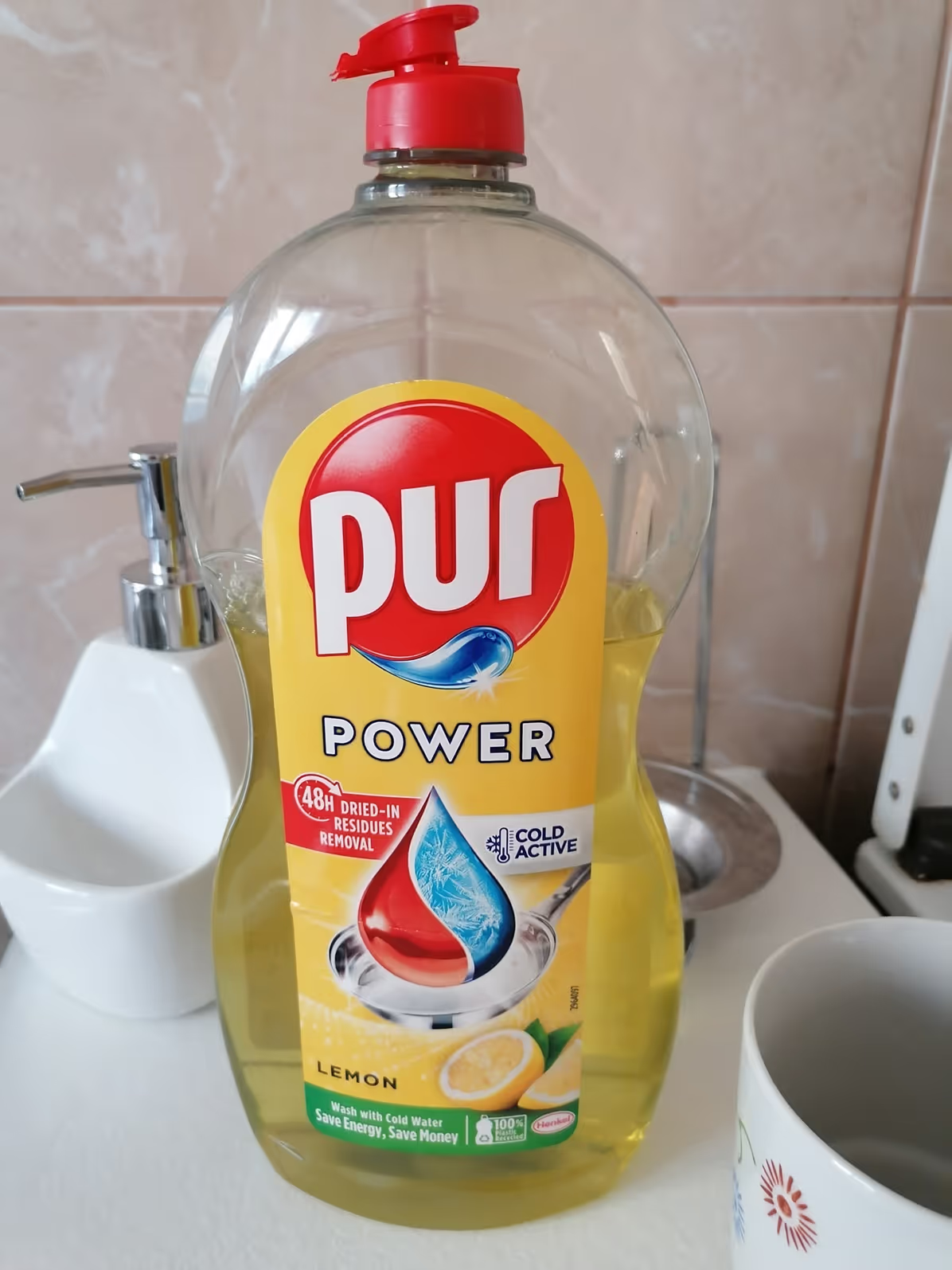
At a recent family event, I noticed the packaging of a dishwasher liquid sitting bythe sink. At first glance, it was "nothing special" - an average design with no extreme elements. But looking closer, the codes on it pointed to three cultural phenomena that indicate a significant shift in our social norms.
”It’s okay to leave the dishes for later.”
”Sustainability is an ethical minimum.”
“Natural is better.”
“Washing dishes is an experience.”
Let's decode these!
Shifting Cultural Norms
IT’S OKAY NOT TO WASH UP IMMEDIATELY: "48H DRIED-IN RESIDUES REMOVAL"
My grandmother wouldn't even understand the concept. She always said: "A good housewife has the dishes done by the time the food is served!"—which always seemed impossible to me. To her, the idea of dirt drying onto a pan in the sink for 48 hours would be bizarre. Times have changed: with this tag, the packaging normalizes the reality of leaving dishes for days.
SUSTAINABILITY: “COLD ACTIVE”
Just like in the laundry detergent category, it’s becoming crucial for dish soaps to be effective in cold water. "Cold active" is a code for sustainability and expresses a new general norm: by using such a product, we meet social expectations and fulfill our "ethical minimum." This isn't just about technological efficiency; it’s about energy consciousness. The green bar at the bottom of the label further reinforces this message.
NATURALNESS AS CLEANLINESS (NOT JUST CHEMICALS)
It doesn't explain; it simply shows. Instead of emphasizing active chemical ingredients, there is a picture of a lemon (complete with its leaf!). Instead of a teflon pan, it shows a simple metal pot. The focus has shifted from the "chemical power" to the idea that the product is more natural, less industrial, and therefore safer to use.
FURTHERMORE: WASHING DISHES CAN ALSO BE AN EXPERIENCE
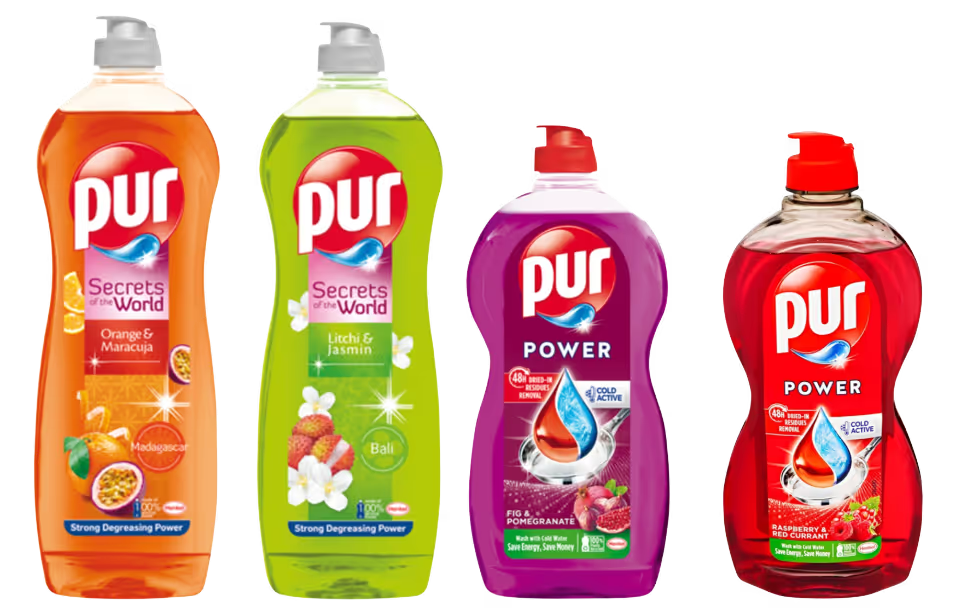
In the past, dish soap scents only aimed to convey "cleanliness" through functional fragrances like lemon, mint, or tea tree. The goal was simply to eliminate unpleasant odors. Today, we find exotic scents like fig, orange, pomegranate, or raspberry, where the focus is on the feeling. Cleanliness is now the default; it no longer needs to be proven. This allows the product to be fragrant, beautiful, and focused on comfort - turning household chores into an aesthetic experience. It’s a form of micro-luxury, evoking the world of shower gels and scented candles. Dishwashing can even become "me-time," a ritualized moment of the day.
What questions should we ask when reading the packaging?
If you want to understand the cultural phenomena behind packaging elements, the following questions can help:
- Don't (only) focus on product promises: What kind of life do we see behind them? Does the user have time? Or are they procrastinating?
- What problem does it normalize? Whatever it offers a solution for, it considers a valid and existing problem.
- What kind of anxiety does it relieve? Guilt? Loss of control? Lack of time?
- Remember: What is it not saying, only showing?
- Based on all this: What cultural changes does it signal?
Summary:
The packaging of a dish soap today doesn't just tell youwhat the product does; it reveals the life situations, anxieties, and values it attempts to manage simultaneously. It tells a story about the rhythm of our lives, what we lack time for, and what makes us feel guilty. It normalizes time-deficiency and procrastination while offering a sense of absolution. Dishwashing is no longer just about hygiene; it’s about the atmosphere.
By understanding contemporary trends and consumer needs, you can work with much more relevant and accurate messages. This allows you to attach emotions to product benefits: relief, liberation, empowerment, comfort, and experience. This is where semiotics, cultural insights, and trend research become indispensable.